

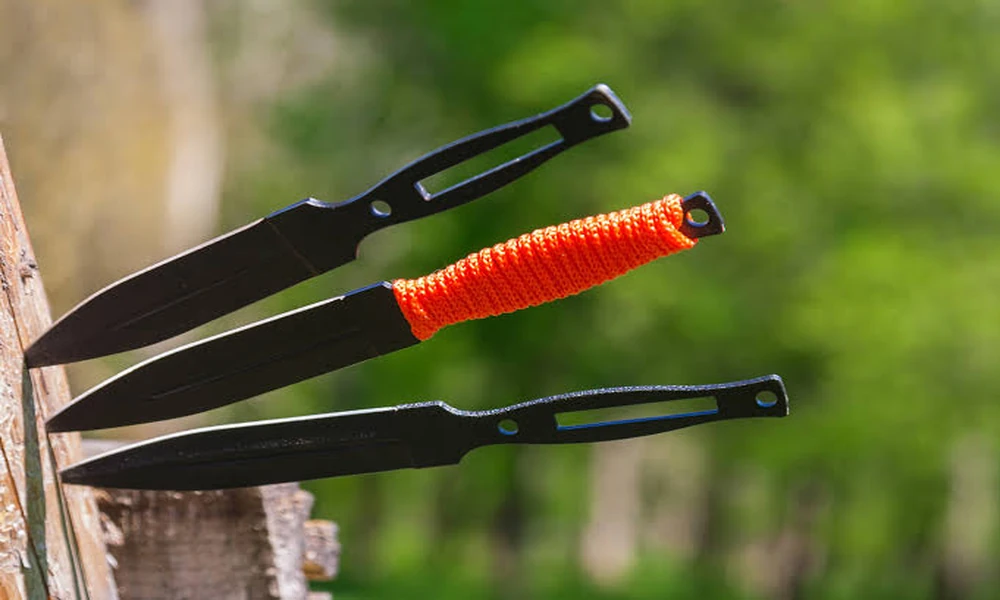
Knives have been useful tools for outdoor enthusiasts, collectors, hobbyists, and professionals for centuries. While traditional fixed-blade and folding knives remain popular, modern knife designs have introduced different opening mechanisms, materials, and customization possibilities. Among these designs, OTF and butterfly knives have developed dedicated communities of enthusiasts who appreciate their engineering, appearance, and practical applications.
For people interested in outdoor activities, camping, collecting, or tactical equipment, understanding the differences between these knife styles can make it easier to choose a design that matches their interests and requirements. Manufacturing quality, blade materials, handle construction, locking mechanisms, and intended use are all important considerations when exploring these products.
What Are OTF Knives?
OTF stands for “out the front,” describing the way the blade moves directly through an opening at the front of the handle. Unlike traditional folding knives, where the blade rotates around a pivot point, an OTF knife uses an internal mechanism to move the blade forward and backward.
This distinctive mechanism is one of the main reasons OTF knives attract collectors and outdoor enthusiasts. Their compact design allows the blade to remain completely enclosed inside the handle when it is not deployed, creating a different user experience from conventional folding knives.
OTF knives can be designed with different blade shapes, handle materials, finishes, and mechanisms. Some are created primarily for collectors and enthusiasts, while others are designed around practical outdoor or utility applications.
The quality of the internal mechanism is particularly important. A well-manufactured OTF knife requires precise machining and careful assembly because the movement of the blade depends on multiple small components working together correctly.
Why Do People Choose OTF Knives?
One of the biggest attractions of OTF knives is their unique mechanism. Knife enthusiasts often appreciate the engineering involved in creating a compact tool that can deploy and retract the blade along a straight path.
Their design can also provide a sleek and modern appearance. Manufacturers can combine metal handles, textured surfaces, different blade finishes, and various blade profiles to create products aimed at different markets.
Collectors may also be interested in OTF knives because customization can make individual models visually distinctive. Handle colors, materials, finishes, blade designs, and branding options can all influence the overall appearance of a knife.
For outdoor enthusiasts, however, it is important to select equipment based on the intended activity rather than appearance alone. A knife used around a campsite, workshop, or outdoor environment should be selected for appropriate construction, reliability, and ease of maintenance.
Exploring Butterfly Knives and Balisongs
Another well-known category is the butterfly knife, commonly called a balisong. Unlike an OTF knife, a butterfly knife has two handles connected to a pivot mechanism. The blade folds between these handles when the knife is closed.
The design has a long history and has become particularly recognizable among knife collectors and hobbyists. Its distinctive construction also makes it interesting from an engineering and mechanical perspective.
Balisongs are available in many different styles. Manufacturers can use different steels, handle materials, finishes, and pivot systems to create products with different characteristics.
People who are interested in the design and collecting side of the hobby may explore custom OTF knives and other specialized knife designs to compare different manufacturing approaches, materials, and visual styles.
What Makes a Knife “Custom”?
Customization is an important part of the modern knife industry. Instead of purchasing a standard product, brands, retailers, collectors, and other buyers may want specific features that make a knife different from an off-the-shelf model.
A custom knife can involve changes to several areas, including:
- Handle material and color
- Blade shape
- Blade finish
- Handle texture
- Hardware
- Branding
- Packaging
- Overall dimensions
- Manufacturing specifications
For businesses, customization can also involve OEM and ODM manufacturing. An OEM arrangement allows a company to have products manufactured according to its specifications, while ODM manufacturing can involve selecting and adapting existing designs.
This approach is particularly useful for brands that want to develop their own product line without establishing an entire manufacturing facility.
Materials and Manufacturing Quality
The materials used in a knife have a significant influence on its characteristics. Blade steel, handle materials, hardware, and finishing processes all contribute to the final product.
Common handle materials can include various metals and engineered materials, while blade construction may involve different types of stainless or specialty steels. Each material can offer different combinations of durability, corrosion resistance, weight, appearance, and maintenance requirements.
Manufacturing precision is equally important. Components such as pivots, springs, screws, locking systems, and blade tracks need to work together accurately. Small manufacturing inconsistencies can affect the feel and reliability of a mechanical knife.
For this reason, buyers interested in custom manufacturing should pay attention to a supplier’s production capabilities, quality-control procedures, experience, and ability to maintain consistent specifications across larger orders.
OTF and Butterfly Knives for Outdoor Enthusiasts
Knives are frequently associated with outdoor activities such as camping, hiking, fishing, hunting, and general wilderness recreation. A dependable cutting tool can be useful for everyday campsite tasks, preparing materials, opening packaging, cutting cordage, and other appropriate utility work.
However, different outdoor activities require different equipment. A compact folding knife may be more appropriate for some users, while others may prefer a fixed-blade design or another specialized tool.
OTF and butterfly knives are also popular among hobbyists who appreciate mechanical designs. Their mechanisms provide an additional element of interest beyond the basic cutting function of a knife.
When selecting a knife for outdoor use, factors such as portability, corrosion resistance, handle grip, blade construction, and ease of cleaning can be more important than simply choosing the most visually impressive model.
Custom Manufacturing for Brands
The growing interest in specialized knife designs has also created opportunities for brands to develop customized products. A company may have its own logo, packaging concept, target market, or product specifications and work with a manufacturer to turn those requirements into a finished product.
OEM manufacturing can be particularly useful when a brand wants a unique knife model without building its own production infrastructure.
Manufacturers offering custom services may work with technical drawings, product specifications, samples, or other design information. Depending on the project, they can assist with materials, dimensions, finishing options, packaging, and production quantities.
Businesses exploring this route should always discuss specifications, minimum order quantities, quality standards, shipping arrangements, and applicable laws before beginning production.
For companies interested in developing specialized knife products, custom balisong options can also provide a starting point for exploring OEM and customized manufacturing possibilities.
Responsible Knife Ownership
Regardless of the knife style, responsible ownership should always be a priority. Knife laws can vary considerably between countries, states, provinces, and cities. Some jurisdictions place restrictions on particular knife mechanisms, blade lengths, carrying methods, or locations where knives may be possessed.
Anyone purchasing, carrying, importing, or selling an OTF or butterfly knife should research the laws that apply to their specific location. This is especially important for international purchases and commercial imports.
Safe handling is also essential. Knives should be stored securely, kept away from children, and handled only for appropriate purposes. Mechanical knives should also be inspected and maintained according to their design and manufacturer’s recommendations.
Choosing the Right Knife
There is no single knife design that is perfect for everyone. The best choice depends on the intended purpose, personal preferences, budget, and local regulations.
Collectors may prioritize unique designs and finishes. Outdoor enthusiasts may focus more on durability and corrosion resistance. Brands may be interested in customization, packaging, and production capabilities. Hobbyists may simply enjoy the engineering and craftsmanship behind different mechanisms.
Before purchasing or ordering a custom knife, it is worth comparing materials, dimensions, construction quality, manufacturing experience, customization options, and after-sales support.
Final Thoughts
OTF and butterfly knives represent two distinctive approaches to knife design. OTF knives are recognized for their out-the-front blade mechanism, while butterfly knives or balisongs are known for their two-handle construction and folding design.
Beyond their mechanical differences, both categories have attracted collectors, hobbyists, outdoor enthusiasts, and businesses interested in customized products. Modern manufacturing also makes it possible to create knives with specialized materials, finishes, branding, and specifications.
For anyone exploring the world of OTF, butterfly, or custom knives, understanding the construction and intended purpose of each design is an important first step. Whether the goal is collecting, outdoor recreation, product development, or simply learning more about knife engineering, researching reputable manufacturers and selecting equipment responsibly can make the experience more rewarding.
As with any specialized tool, quality, proper maintenance, safe handling, and compliance with local regulations should remain central to the decision-making process.
